FROM RUSSIAN NEUROSUREON TO AMERICAN SURGICAL ASSISTANT – A SUCCESS STORY
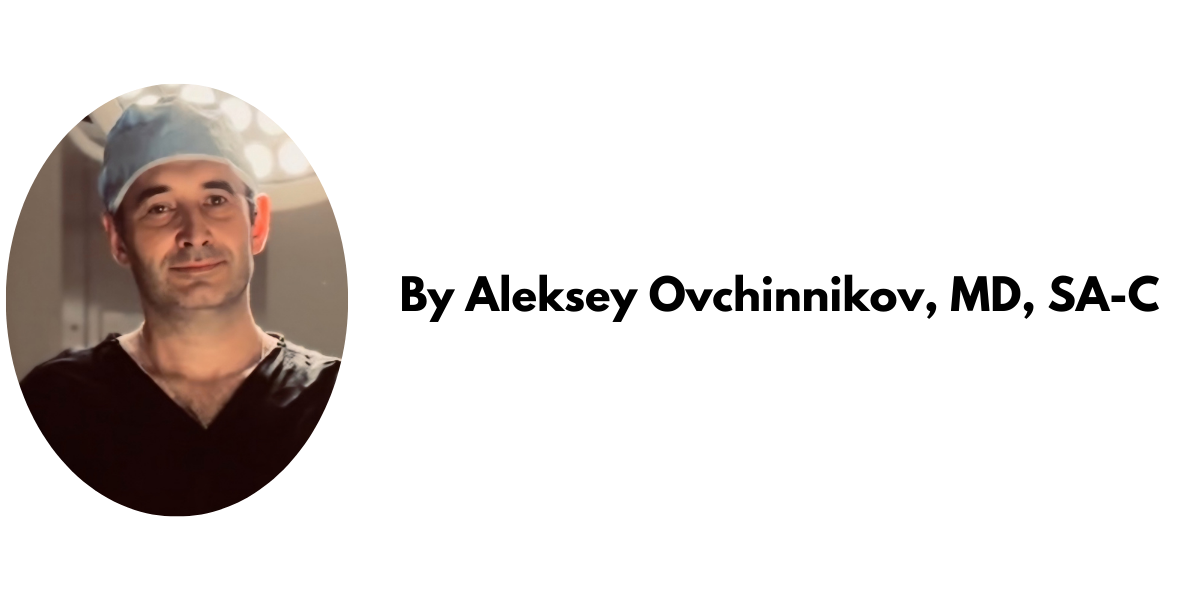
Hello, fellow Surgical Assistants and aspiring medical professionals! My name is Aleksey Ovchinnikov, MD, SA-C, and I want to share my journey with you. My story is for anyone who dreams of making it in the medical field, especially those of you who are international medical graduates like me navigating the challenges of the American healthcare system.
A Dream Reimagined
My journey began in Novosibirsk, Russia, where I enrolled in Novosibirsk State Medical University in 2006. From a young age, I was fascinated by natural science, thanks to an Atlas of Human Anatomy my grandmother gave me and tales of microbes from my parents. The intricate workings of the human body drew me in, and my passion for surgery only grew stronger over time.
I decided to specialize in neurosurgery, driven by my fascination with the nervous system’s complexity and a mysterious encounter with acupuncture therapy. I mostly performed traumatic brain injury surgeries, with one case of severe craniofacial trauma standing out as a highlight in my career.
In 2012, my wife and I won the Green Card lottery and decided to move to the United States, a decision driven by the desire for new opportunities and the fear of lifelong regret if we didn’t seize this chance. However, the path was not as straightforward as I anticipated. My English proficiency was insufficient for the USMLE exams, and the prospect of repeating a neurosurgery residency program was daunting, especially with a family to support.
But giving up on my passion for surgery was not an option. Instead, I found a new way to feed my passion and get as close to a being surgeon as I possibly could – by becoming a Surgical Assistant (SA).
Overcoming Challenges
The journey was challenging. Initially, it was demoralizing to realize I couldn’t practice as a neurosurgeon in the US. More than once, I almost gave up and considered returning to Russia. To stay connected to the medical field, I trained as a Medical Assistant and a Phlebotomist, taking on student loan debt.
A turning point came when I discovered that the American Board of Surgical Assistants (ABSA) would recognize my Russian medical education and experience. This recognition gave me the confidence boost I needed. I prepared for the Surgical Assistant certifying exam by taking an online preparation course and attending a 6-day surgical skills lab offered by ACE Surgical Assisting. These 2 courses grounded me in in the way things are done in US operating rooms and equipped me with essential skills across multiple specialties.
Professional Growth and Financial Stability
Becoming a Surgical Assistant – Certified (SA-C) significantly improved my financial situation. My income doubled, allowing my family and me to move to a better place. Proper training not only enhanced my skills but also earned me respect in the operating room. Surgeons often seek my advice, and I take pride in a suturing technique that I invented, which has received positive feedback from colleagues and patients alike for better patient outcomes.
The Dream Continues
My ultimate goal is to become a Doctor of Acupuncture and start my own business. I am currently preparing for the Physician Assistant school application, needing to complete three more prerequisites. The journey continues, but I am determined to keep pushing forward.
Takeaways and Recommendations
rom my experience, I’ve learned three key lessons that I hope will inspire and guide other international medical graduates:
-
Have a Clear Plan: Define your goals and create a roadmap to achieve them. For me, it was returning to the medical field, securing hospital employment, and getting back into the operating room.
-
Network Actively: Reach out to surgeons and healthcare professionals both online and in person. Utilize hospital databases, email, and personal connections to expand your network.
-
Commit to Continuous Learning: Revisit and practice essential skills regularly. Attending skill labs and recording practice sessions helped me master suturing techniques, making me a valuable team member.
Persistence pays off. Despite the initial struggle to find a Surgical Assistant job, I never gave up. I volunteered in hospitals, honed my skills at the ACE Surgical Assisting skill lab, and continuously improved my English and resume. Volunteering led to my first job as a Surgical Tech/First Assistant in a pain clinic, and building relationships eventually opened doors to better opportunities.
Your journey might be challenging, but with determination, resilience, and a clear plan, you can achieve your dreams in the American healthcare system. Keep pushing forward and remember, every step you take brings you closer to your goals.